



7 Common Baking Problems Solved by a Creamy White Stand Mixer
October 27, 2026
The recipe was followed exactly. The cake still baked dense, the cookies spread flat, and the bread refused to rise. Such problems frustrate every baker. Uneven mixing, overmixing, dough that will not rise, inconsistent texture, arm fatigue, splash-out mess, and counter clutter all trace back to technique and equipment. A creamy white stand mixer delivers practical solutions. Each section pairs one issue with the feature that fixes it, including moments when beaters will not spin or a rattling noise appears.
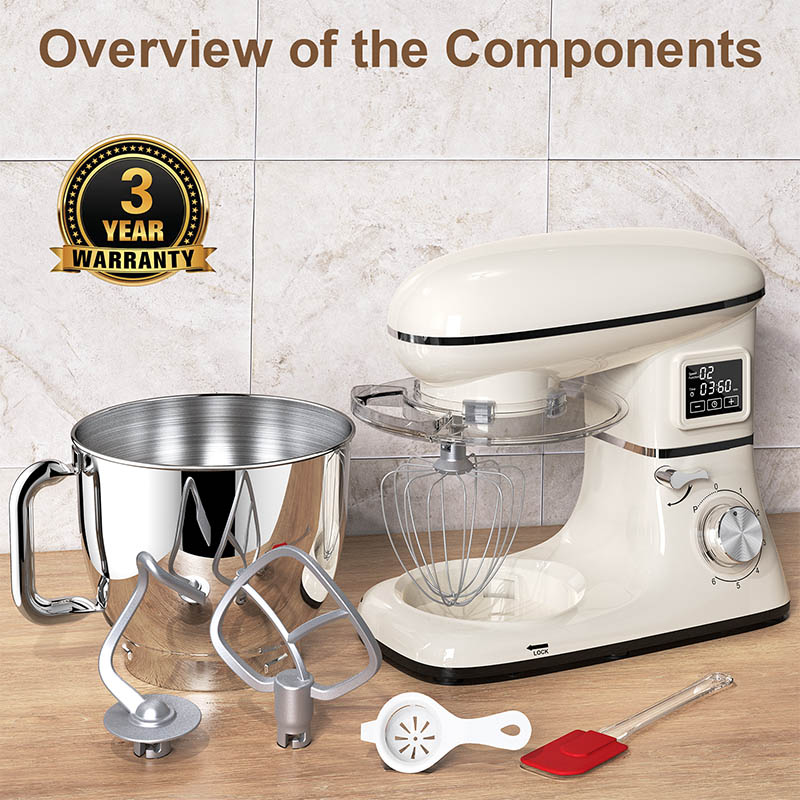
Streaky batter usually starts with a beater that travels the same fixed path. Planetary mixing solves this problem. The beater spins on its own axis while it orbits the bowl in the opposite direction, much like the solar system. This overlapping pattern reaches the full diameter of the bowl and leaves no dead zones where dry flour can hide. A 325-watt motor driving planetary action across 59 touchpoints around the bowl produces even results without repeated scraping. That full-coverage motion is what separates a true stand mixer from a basic one. The 6 speeds plus pulse function add control, so a baker can start slow and build up. A creamy white stand mixer applies this action to every batch, from stand mixer cake batter to whipped cream.
Tip: scrape the bowl once after adding dry ingredients, then let the planetary motion finish the job.
Dense cakes and tough cookies often come from speed that will not hold steady. Consistent speed control prevents overmixing. The AC pure copper motor and full metal gears deliver steady power at each setting, so the beater does not surge or stall mid-batch. Bakers who chase lumps with a fast beater around the bowl push gluten and air further than the recipe intends. Stop at the recipe's stated time instead. A few small specks of flour are fine, and they hydrate during baking. Start on low speed when combining wet and dry components, and finish delicate mixtures by hand. These habits keep stand mixer meringue tips useful, because a stable low setting builds foam without collapsing it.
Tip: set a timer for the recipe's stated mixing time and stop when it sounds.
Both problems share one root cause: ingredients to not be mixed thoroughly or mixed too long. Steady beating removes the guesswork.
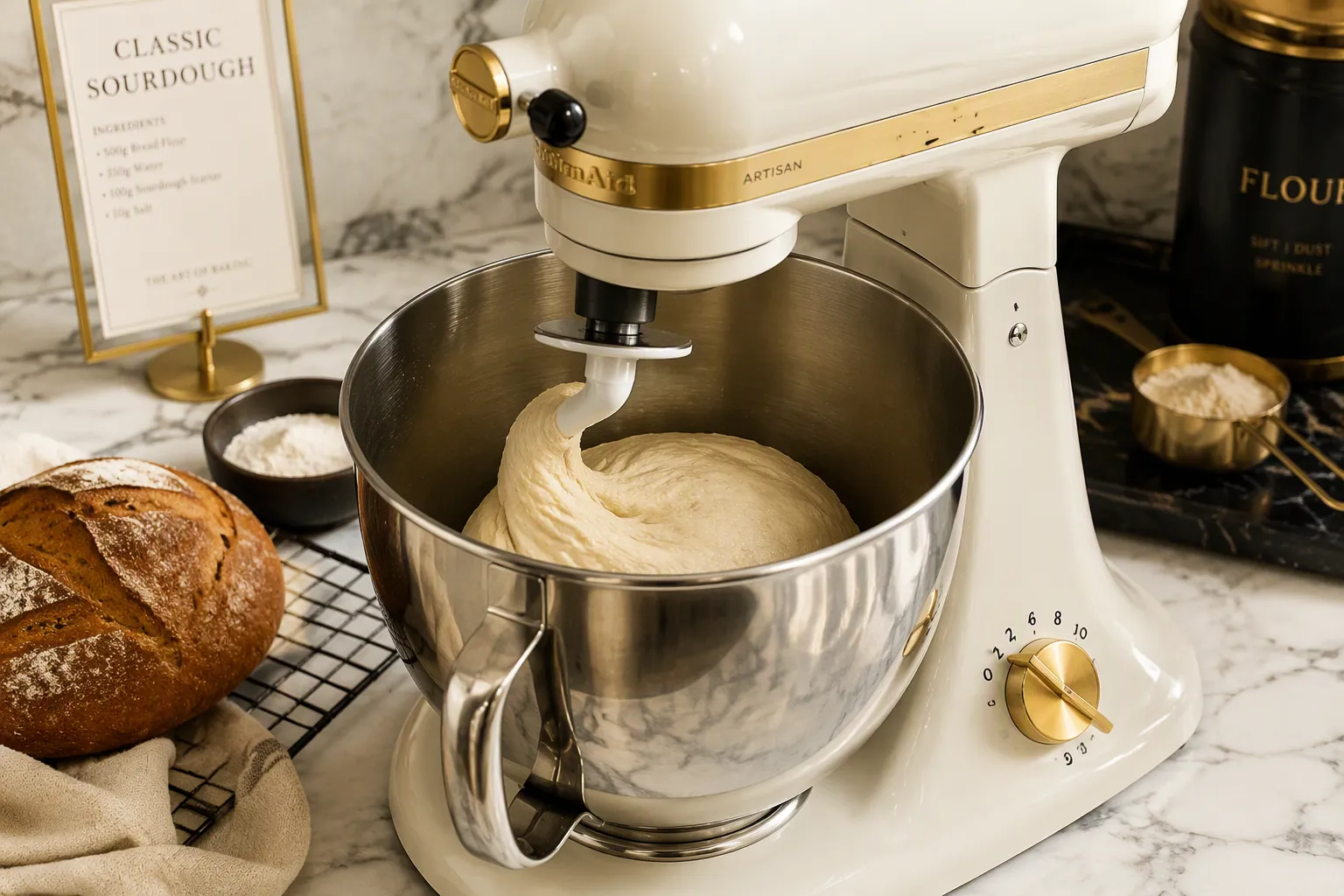
A dense, flat loaf often signals weak gluten. Gluten develops through thorough, even kneading, and hand kneading leaves inconsistent patches. The dough hook attachment changes this outcome. It moves through the 5.5L SUS304 stainless steel bowl and stretches the dough against the bowl wall with each pass. The stainless steel surface offers food-safe reliability and a smooth interior that the dough releases from cleanly. The hook reaches the bottom and sides of the bowl in one continuous motion, so no dry flour pocket survives at the base. Even kneading builds a strong gluten network, and that network traps gas during fermentation. A strong network gives the loaf the lift it needs. The dough hook also handles stiff mixtures that would stall a hand beater. A stand mixer sticky dough benefits from this steady hook action, because the hook keeps working the mass instead of letting it cling to fingers. Bakers should knead until the dough pulls away from the bowl and passes the windowpane test. A dough that tears instead of stretching needs more time under the hook.
Tip: let the dough hook run on a low setting and check gluten development after a few minutes rather than guessing by feel.
One batch of bread turns out tender, the next turns out tough. Repeatable speed settings solve this problem. Each numbered setting holds the same pace every time, so the kneading duration and intensity stay constant across batches. The belt-driven structure adds smooth power delivery without sudden jolts. Full metal gears and ball bearings keep that delivery stable over repeated use. A baker who records the setting and time for a successful loaf can reproduce it exactly on the next attempt. This repeatability matters for stand mixers used in regular weekly baking. The creamy white stand mixer brings this consistency to every dough batch, from sandwich bread to pizza dough. The beater and whisk attachments follow the same logic for batters and creams. Texture drift between batches usually comes from small changes in speed or time, and fixed settings remove that variable. Weighing flour on a kitchen scale supports this effort, since equal flour weights keep hydration steady from one batch to the next.
Tip: write down the speed number and mixing time for each successful recipe, then reuse those notes.
Both dough problems trace back to control. Even kneading and repeatable speeds give the baker a predictable result.
Most cases of beaters that won't spin trace to three causes. The attachment may not sit fully in its socket, the speed dial may rest at 0, or the motor may have tripped on overload. The LED indicator shows power status, and the pulse function confirms the motor still runs. A hands-free stand mixer also removes arm fatigue, since the machine carries the workload. If the beaters stall after a long batch, let the motor cool before restarting.
A misaligned beater can also cause problems. Check that the bowl is securely attached to the base, then run the dime test: place a dime on the bottom of the bowl and lower the beater. A properly aligned beater barely touches the coin. Beater being out of alignment shows up as a beater to hit the edges of the bowl or scrape its base. Adjust your beater height to restore bowl clearance, and confirm alignment before each bake.
A rattling noise usually points to loose parts or worn interior lubrication. Full metal gears, ball bearings, and a belt-driven structure keep operation smooth and quiet. A stable base holds the mixer firm, so batter stays in the bowl instead of splashing out. The compact creamy white stand mixer also frees counter space between bakes.
Persistent rattling noises, a wobbling head, or leaking oil call for service. Food-safe grease supports interior lubrication, and routine lubrication belongs in every maintenance schedule. A qualified repair resolves most faults, and certifications such as CE, GS, RoHS, and ETL confirm baseline reliability. These simple solutions turn a mixer problem into a quick fix.
Streaky batter, dense cakes, flat loaves, uneven batches, tired arms, splashed counters, and cluttered workspace all trace back to mixing method, motor consistency, or workflow. A creamy white stand mixer addresses all three, and it also settles troubleshooting moments like stalled beaters or a rattling noise.
Frequent bakers gain the most from hands-free mixing and a counter-ready design. Hand mixers still suit occasional small batches. For anyone baking often, this stand mixer rewards the investment with steadier results and calmer routines. Stand mixers earn their place through repetition.
The SUS304 stainless steel bowl holds large dough batches, cake batter, and whipped cream. The dough hook, beater, and egg whisk cover kneading, mixing, and whipping tasks in a single stand mixer.
Full metal gears, ball bearings, and a belt-driven structure keep operation smooth and quiet, so heavy dough work remains comfortable in a home kitchen.
Check bowl seating before each use and run the dime test to confirm clearance. Proper alignment protects the coating and keeps the stand mixer working evenly across the bowl.



전화 : +86-755-8450 0805
이메일 : sale@sanlidaco.com
No.27,Jiangjunmao lndustrial area, Wulian community, Longgang street,Longgang district, Shenzhen City, Guangdong Province, China 518083
